2024 · Energy
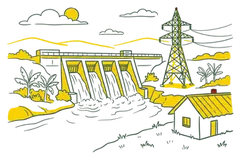
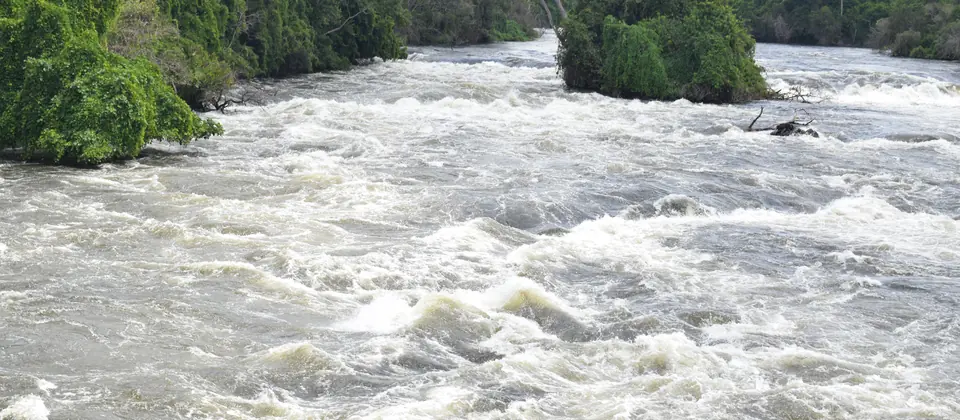
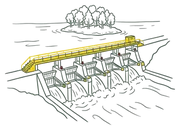
The Karuma hydropower station
The 600 MW station on the Nile was connected unit by unit from March 2023, and began commercial operation on 12 June 2024. The President commissioned it on 26 September 2024.
It has six units of 100 MW.
 Uggov Agent
The President, what was delivered, the record, past presidents and Parliament, in one place.
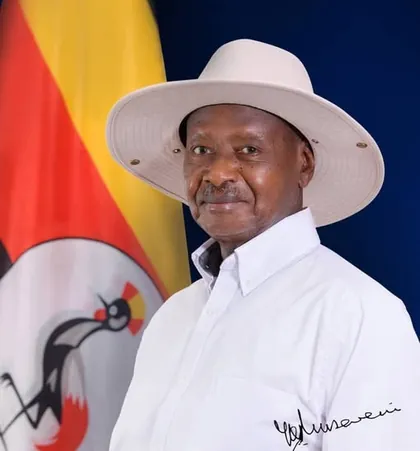
President of the Republic of Uganda
In office since 29 January 1986
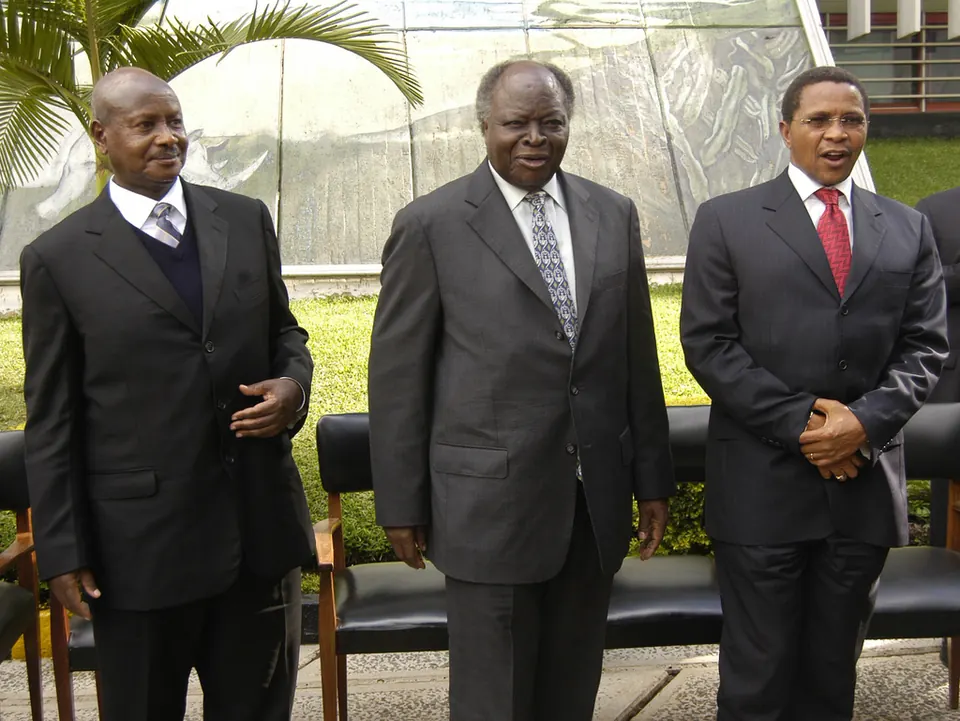
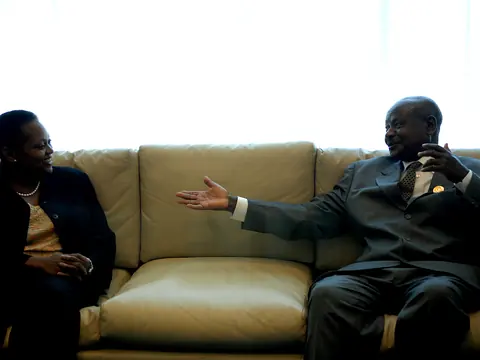
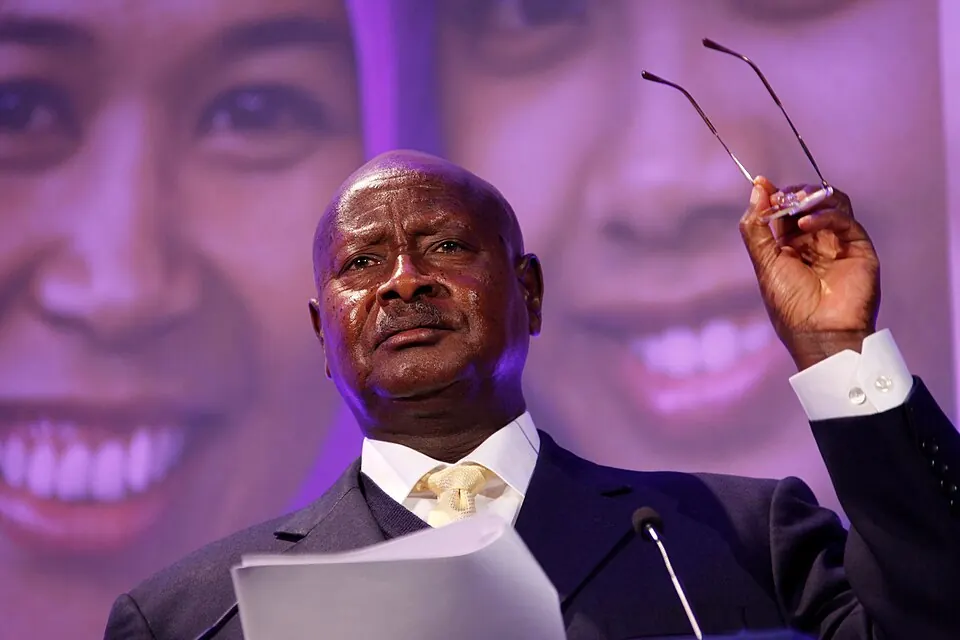
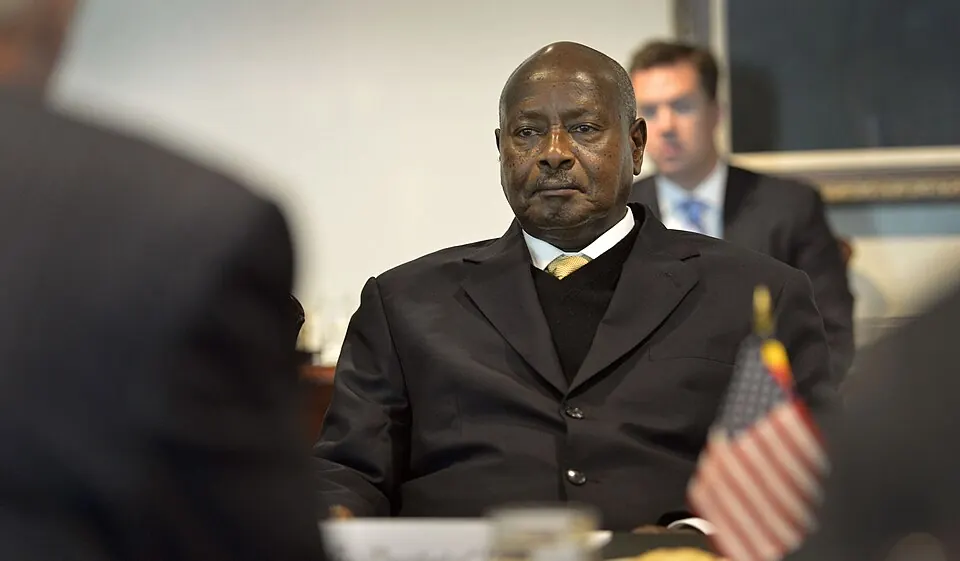
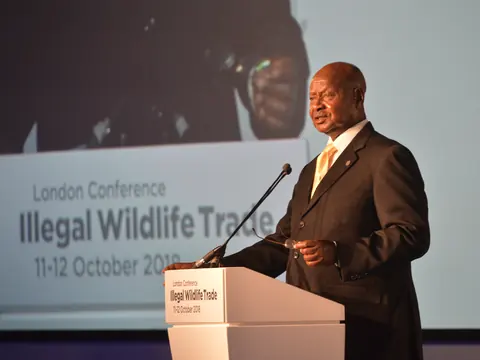
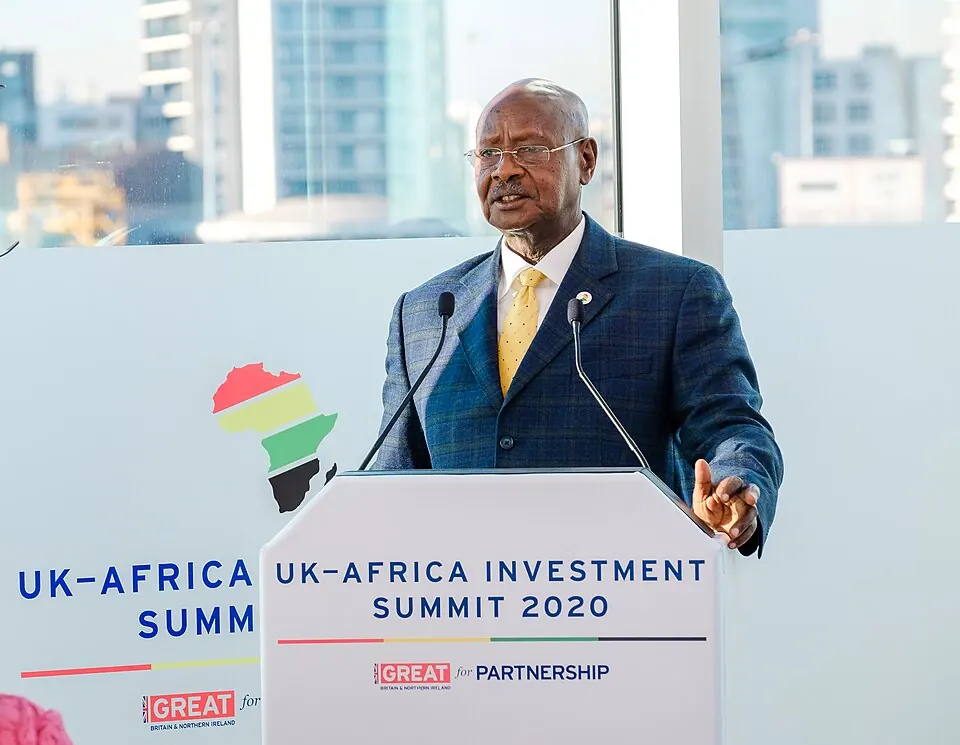
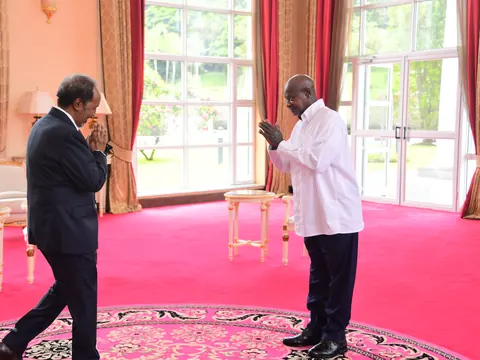
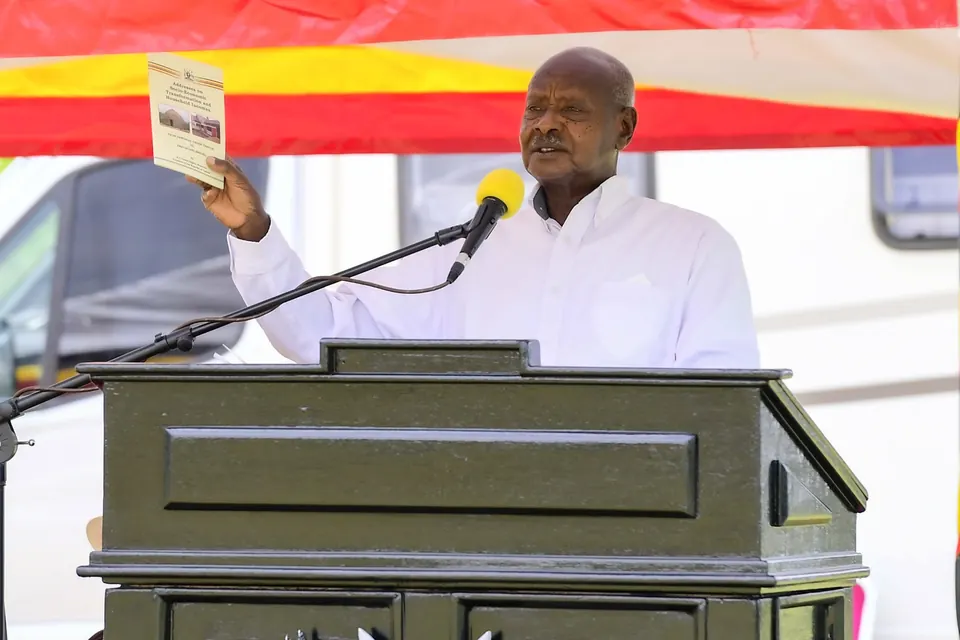
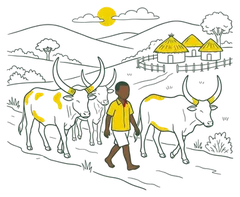
Born in what is now Ntungamo District, western Uganda, into a family of cattle keepers.
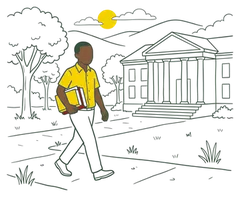
Starts at Mbarara High School, and moves to Ntare School in 1961.
Graduates with a BA from the University of Dar es Salaam in Tanzania.
The army under Idi Amin takes power. Museveni goes into exile in Tanzania.
Amin is overthrown. Museveni becomes Minister of Defence in the new government.
The Military Commission removes President Binaisa. Museveni is its vice-chairman.
His party, the Uganda Patriotic Movement, wins one seat in the general election. The UPC is declared the winner. The result is disputed.
His group begins an armed struggle with an attack on Kabamba military barracks.
His Popular Resistance Army joins Yusuf Lule's group to form the National Resistance Army. Lule is chairman and Museveni is deputy chairman and army commander.
After Lule's death, Museveni becomes chairman of the National Resistance Army.
The army takes Kampala. The government of Tito Okello falls.
Museveni is sworn in as President.
Traditional kingdoms are restored as cultural institutions.
The Constitution that governs Uganda today comes into force.
Voters approve a return to multiparty politics in a referendum.
The Constitution (Amendment) Act, 2005 comes into force. It removes the limit on how many terms a President may serve.
Parliament passes, and the President signs, an amendment that removes the age limit for presidents.
The Constitutional Court upholds the removal of the age limit. It strikes down the seven-year terms for Parliament and local councils, and the two-term limit the amendment brought back, because of how they were added.
The Supreme Court upholds the removal of the age limit, by 4 votes to 3.
Takes the chair of the Non-Aligned Movement at its summit in Kampala.
The Supreme Court lets the only petition against the 2026 election be withdrawn and confirms him as elected.
Takes the chair of the East African Community Summit in Arusha.
Sworn in for the 2026 to 2031 term.
15 January 2026
71.65% of valid votes: 7,946,772 votes. Eight candidates stood. The runner-up, Robert Kyagulanyi Ssentamu of the National Unity Platform, had 24.72%. Turnout was 52.5%.
14 January 2021
58.38% of valid votes: 6,042,898 votes, in the Electoral Commission's final result. The Commission first declared 58.64% on 16 January. The runner-up, Robert Kyagulanyi Ssentamu of the National Unity Platform, had 35.08%. Turnout was 59.35%.
18 February 2016
60.62% of valid votes: 5,971,872 votes. The runner-up, Kizza Besigye, had 35.61%. Turnout was 67.61%.
18 February 2011
68.38% of valid votes: 5,428,369 votes. The runner-up, Kizza Besigye, had 26.01%. Turnout was 59.29%.
23 February 2006
59.26% of valid votes. The runner-up, Kizza Besigye, had 37.39%. Turnout was 69.19%.
12 March 2001
69.4% of valid votes: 5,088,470 votes. The runner-up, Kizza Besigye, had 27.7%.
9 May 1996
74.3% of valid votes: 4,458,195 votes. The first direct presidential election. The runner-up, Paul Ssemogerere, had 23.6%.
Source: Electoral Commission
Who can stand
A citizen of Uganda by birth who is a registered voter and has at least an A-Level education or its equivalent. Nominees need the backing of 100 voters in at least two thirds of the districts.
How it is decided
By secret ballot of all adult voters. A candidate needs more than half of the valid votes. If nobody gets that, the top two go to a second round within 30 days.
The term
Five years. A person may be elected for one or more terms. Changing that rule needs two thirds of Members of Parliament and a referendum.
Challenging a result
The Electoral Commission declares the result. A candidate has 15 days to petition the Supreme Court, which must decide within 45 days.
If the office falls vacant
The Vice President takes over, and a new election is held within six months. If a year or less of the term is left, there is no election.
Removal
At least one third of Members of Parliament can start it. For abuse of office or misconduct, a tribunal of three Supreme Court justices looks at the charge. For incapacity, a medical board of five specialists examines the President. Two thirds of Members must then vote to remove the President.
Things the Government built, passed or started, each with its year. They do not say what caused a change. Each row was read against official pages, such as the Gazette and the agency concerned, and a second source.
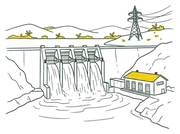
2024 · Energy
The 600 MW station on the Nile was connected unit by unit from March 2023, and began commercial operation on 12 June 2024. The President commissioned it on 26 September 2024.
It has six units of 100 MW.
A new law for vocational training
Parliament replaced the 2008 vocational law with the TVET Act. It merges the old examination bodies into new assessment boards, requires artisans to register and creates a skills development fund, paid for by the Government and a levy on employers.
A new lower secondary curriculum
A revised curriculum based on skills began with Senior One in 2020. School closures delayed its later years.
Source: National Curriculum Development Centre
Loans for higher education students
Parliament set up a loan scheme and a board to run it. The first loans went out for the 2014/15 year. The Education Ministry has run the scheme since January 2025.
About 1,200 loans were given in the first year.
Source: Uganda Gazette
Skilling Uganda
The Education Ministry launched a ten-year plan for business, technical and vocational training, covering 2012/13 to 2021/22.
Source: Ministry of Education and Sports
A new Education Act
The Act wrote the universal primary and post-primary programmes into law.
Head teachers may not charge tuition at government and grant-aided primary schools. A pupil cannot be sent away for not paying for school meals.
Source: Uganda Gazette
Free lower secondary tuition
Government began paying tuition for pupils who pass the primary leaving exam, in government schools and partner private schools.
About 1,000 schools joined at the start. There were 0.95 million secondary pupils in 2007 and 1.36 million in 2013.
Source: World Bank
A regulator for universities
Parliament created the National Council for Higher Education, which licenses and oversees universities and other tertiary institutions.
Source: Uganda Gazette
Free primary schooling
Primary schooling became free of tuition in government schools. It began in January 1997 for up to four children in each family, and was later opened to all children.
Source: Ministry of Education and Sports
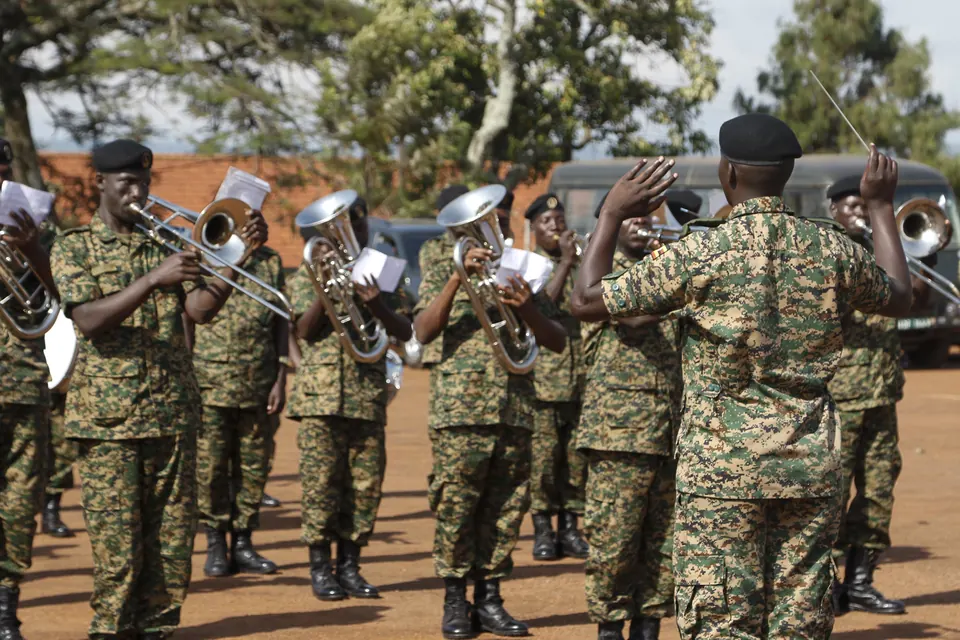 UPDF band, Jinja
National identity cards
Uganda enrolled its citizens in a national identity register and began issuing ID cards from December 2014. Parliament then set up the National Identification and Registration Authority.
About 16.5 million people were enrolled in the first drive, in 2014 and 2015.
The African Union mission in Somalia
Uganda sent the first troops of the African Union mission to Mogadishu in March 2007.
The mission has since changed its name twice. Uganda began bringing its troops home in late October 2026, starting with those serving under a separate agreement with Somalia. It plans to leave the African Union mission in 2027.
The Refugees Act
The law came into force in May 2007. With its 2010 regulations, refugees may move freely, look for work and farm land set aside for them.
At the end of October 2026, Uganda hosted 2.06 million refugees and asylum seekers.
A plan for northern Uganda
The Government published the Peace, Recovery and Development Plan, one plan to coordinate Government and donor work in the north after the displacement.
The plan covered 2007/08 to 2009/10. A second phase ran from 2012 to 2015.
Source: Office of the Prime Minister
A ceasefire with the Lord's Resistance Army
The Government and the rebel group signed a cessation of hostilities in Juba. No final peace agreement followed.
Fighting inside northern Uganda stopped after it. About 1.8 million people lived in camps at the peak in 2005, and by 2012 the great majority had returned or resettled.
Source: Internal Displacement Monitoring Centre
The UPDF Act
Parliament passed the law that sets up and governs the defence forces under Article 210 of the Constitution. It replaced the 1992 National Resistance Army Statute.
The Amnesty Act
Parliament passed a law that lets people who took part in armed rebellion hand themselves in and be reintegrated. An Amnesty Commission runs it.
The Police Act
The National Resistance Council, the legislature before 1996, passed the law that sets how the Uganda Police Force is organised and what it does. It has been amended several times since.
The Kampala flyover, phase one
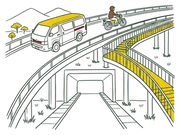
The first phase of the Kampala Flyover and Road Upgrading project opened at Clock Tower in March 2025.
It has a 584 m flyover, a 375.8 m underpass at Nsambya, three footbridges and 3,190 m of wider road. Phase two has not been built.
The Hoima road
The 135 km road from Kigumba through Masindi and Hoima to Kabwoya was upgraded from gravel to tarmac and opened in January 2022.
Source: African Development Bank
The Northern Bypass, stage two
The second stage made the bypass round the north of Kampala a four-lane road.
It added about 17.5 km of carriageway, six interchanges and three footbridges.
Source: European Union Delegation to Uganda
The Katosi water treatment plant
The plant on Lake Victoria was finished and handed to the National Water and Sewerage Corporation. It supplies Greater Kampala.
It was designed for 160,000 cubic metres a day, with room to grow to 240,000. A main of more than 50 km carries the water to Kampala.
The Bugolobi wastewater plant
The plant that treats sewage from central and eastern Kampala began operating.
It is designed for 45,000 cubic metres a day, with 31 km of sewers serving Naguru, Ntinda, Nakawa, Bugolobi and nearby areas.
The Entebbe airport extension
Part of the new departures extension at Entebbe airport opened to passengers in late November 2020.
The airport had 1.93 million international passengers in 2023 and 2.24 million in 2024.
Source: Civil Aviation Authority
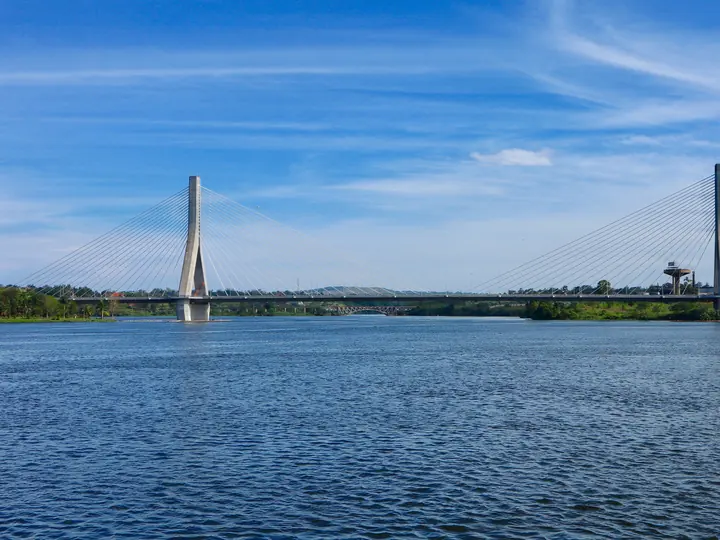
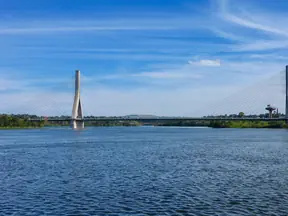
The Source of the Nile Bridge
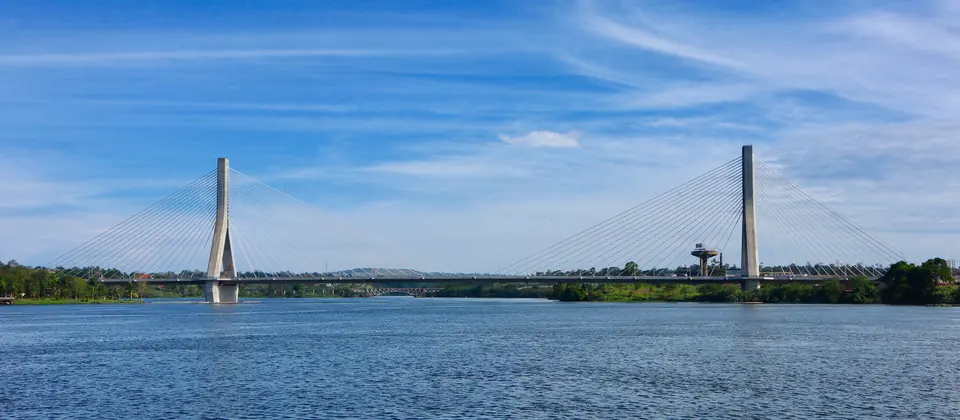
The cable-stayed bridge over the Victoria Nile at Jinja opened in October 2018.
It is 525 m long. Work began in January 2014.
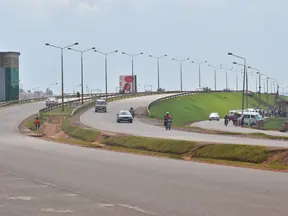
The Kampala to Entebbe Expressway
The four-lane toll road from Busega in Kampala to Entebbe opened in June 2018.
It is about 50 km long, with toll plazas at Busega, Kajjansi and Mpala. Work began in 2012.
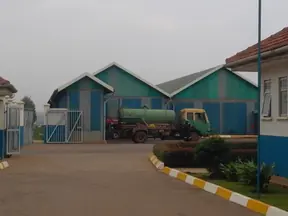
The Lubigi sewage plant
The plant that treats sewage and sludge from Kampala's toilets and septic tanks began working.
It was the first project under the 2004 Kampala sanitation master plan. At a 2017 review it took about 2,500 cubic metres of sewage and 315 cubic metres of septic-tank sludge a day.
Source: KfW Development Bank
The Northern Bypass, stage one
The first stage of a road round the north of Kampala was finished.
Work began in 2004. It was a two-lane road until stage two.
Source: European Union Delegation to Uganda
Under way
The Standard Gauge Railway
The Malaba to Kampala line, 272 km, is at the stage of early works. A limited notice to proceed was issued on 14 May 2025.
No rail has been laid in Uganda yet.
Source: Ministry of Works and Transport
The new Entebbe passenger terminal
The Civil Aviation Authority said in December 2025 that the new terminal was complete and would open in phases during 2026.
Source: Civil Aviation Authority
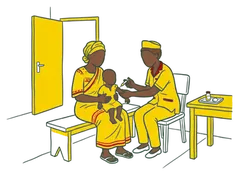
A malaria vaccine
A malaria vaccine joined routine child immunisation in April 2025. It was launched at Apac for 105 districts where malaria is high or moderate.
It is meant first for about 1.1 million children under two, in four doses.
Source: Gavi, the Vaccine Alliance
A second Ebola outbreak ended
Uganda declared a Sudan-virus Ebola outbreak on 30 January 2025 and declared it over on 26 April 2025.
There were 14 cases and 4 deaths, including probable cases.
Source: World Health Organization
An Ebola outbreak ended
Uganda declared a Sudan-virus Ebola outbreak on 20 September 2022 and declared it over on 11 January 2023.
There were 164 cases and 77 deaths, including probable cases, in nine districts.
Source: World Health Organization
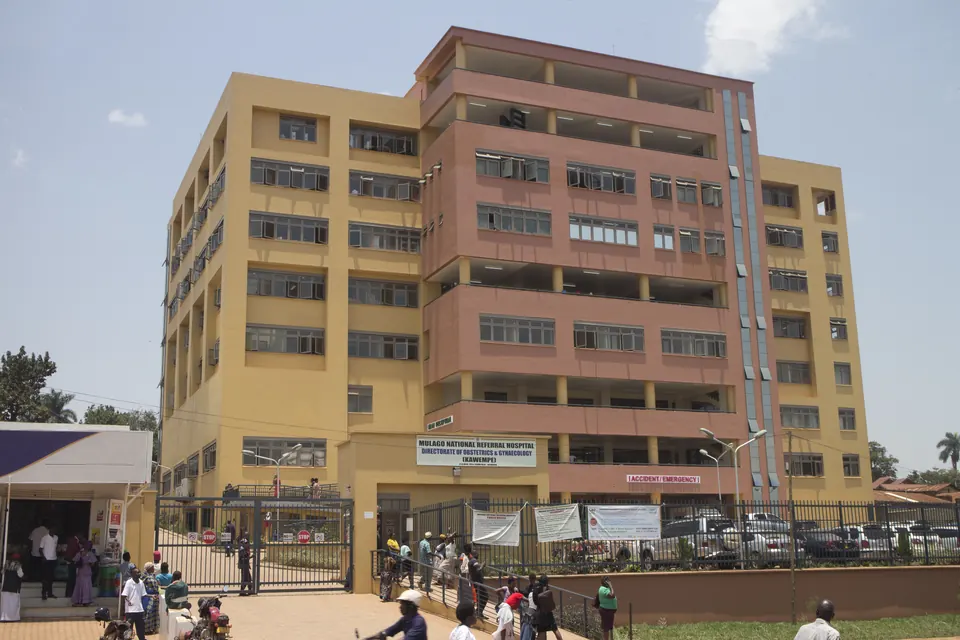
A hospital for women and newborns
A 450-bed hospital for women and newborns opened at Mulago in September 2018. It takes referred patients only.
It offers care for high-risk pregnancies, newborn intensive care, gynaecological cancer care and fistula repair.
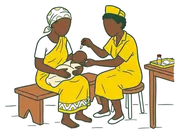
A rotavirus vaccine
The rotavirus vaccine joined the routine schedule on 26 June 2018, as the eleventh vaccine.
It is two oral doses, at 6 and 10 weeks, free at health facilities.
Source: United Nations Children's Fund (UNICEF)
The Heart and Cancer Institutes
Two Acts made the Uganda Heart Institute and the Uganda Cancer Institute independent bodies in law.
The Heart Institute Act names reducing referrals abroad for heart disease as one of its purposes.
Source: Uganda Gazette
HPV vaccination for girls
National vaccination against the virus that causes cervical cancer began in November 2015, through schools and routine health services.
It was for girls aged 10, in two doses.
Source: Gavi, the Vaccine Alliance
Tetanus of mothers and newborns eliminated
A survey confirmed that Uganda had eliminated maternal and newborn tetanus.
Between 2002 and 2009, close to 2 million women of child-bearing age received three tetanus doses. Elimination means fewer than 1 newborn case in every 1,000 live births in every district.
No fees at public health units
Government stopped charging fees at public health units in March 2001. Private wings in public hospitals stayed.
Fees had been charged officially since 1993.
The Karuma hydropower station
The 600 MW station on the Nile was connected unit by unit from March 2023, and began commercial operation on 12 June 2024. The President commissioned it on 26 September 2024.
It has six units of 100 MW.
Source: Uganda Electricity Generation Company Limited
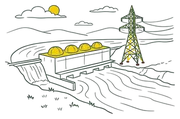
The Karuma power lines
Three lines carry Karuma's power: Karuma to Kawanda (400 kV, about 250 km), Karuma to Olwiyo (400 kV, 55 km) and Karuma to Lira (132 kV, 76 km).
The national grid grew from 3,991 km in March 2023 to 4,962 km in September 2024.
Source: Uganda Electricity Transmission Company Limited
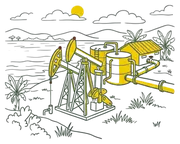
The decision to develop Lake Albert oil
The Government and its partners took the final investment decision on the Tilenga and Kingfisher oil fields and the pipeline to Tanga in Tanzania, on 1 February 2022.
The pipeline is about 1,443 km long. No oil has flowed yet.
The Isimba hydropower station
The 183 MW station on the Nile at Kayunga District was commissioned in March 2019.
It has four units. Commercial operation began on 30 March 2019.
Source: Uganda Electricity Generation Company Limited
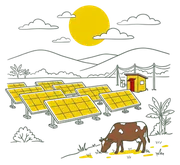
Solar power at Soroti and Tororo
A 10 MW solar plant at Soroti began supplying power in December 2016. A second 10 MW plant at Tororo followed in October 2017.
Private companies built and run both, under a support scheme run with the energy regulator.
Two laws for the oil sector
Parliament passed the law for finding and producing oil, in force in April 2013, and the law for refineries, pipelines and storage, in force in July 2013.
The first created the Petroleum Authority of Uganda and provides for a national oil company.
Source: Petroleum Authority of Uganda
The Bujagali dam
The 250 MW dam on the Nile near Jinja was opened in October 2012. A private company, with the Government as one shareholder, built and runs it.
Its five 50 MW units came on between February and June 2012.
Under way
The oil pipeline and fields
In October 2026 officials put the pipeline at 92% built, Tilenga at 78% and Kingfisher at 90%. The national oil company expects first oil before the end of June 2027.
The earlier targets of 2025 and July 2026 were missed.
The Mining and Minerals Act
Parliament replaced the 2003 Mining Act. The State may take a free stake in large and medium mines.
The stake is up to 15%, held by a national mining company. The Act also sets local content rules for jobs, goods and services.
The Parish Development Model
The President launched a programme that sends a yearly sum to every parish through a parish savings cooperative.
There are 10,594 parishes. The plan is Shs 100 million a parish each year from 2022/23.
Emyooga
Cabinet approved Emyooga in August 2019 and money reached the savings groups from 2020. It gives start-up funds to savings groups of informal workers, one set for each constituency.
Each group gets Shs 30 million, and the elected leaders' groups get Shs 50 million. Cabinet named 18 categories of worker, such as boda boda riders, market vendors and fishers.
The Busia one-stop border post
The one-stop border post at Busia opened in early 2018, so officers of Uganda and Kenya clear travellers and goods in one place.
Value added tax
Uganda introduced value added tax on 1 July 1996.
The Uganda Revenue Authority
The National Resistance Council, then the legislature, set up the authority that assesses and collects national taxes.
The national fibre backbone
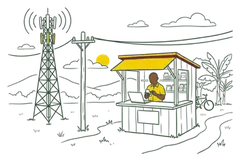
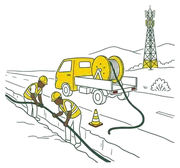
Since 2006 the Government has built a fibre network that links ministries, district headquarters and border stations. The National Information Technology Authority runs it.
After four phases it reached 53 district headquarters, 11 major border stations and 1,480 ministries, departments and agencies, over more than 4,000 km. Phase five began in December 2024 and adds 5,845 km.
Source: National Information Technology Authority Uganda
5G licensed
The regulator sold 5G spectrum in July 2023, and the first 5G sites were switched on that month. Mobile companies built the networks.
The Data Protection and Privacy Act
Parliament passed the law on how personal data may be collected and used. It gives people rights over their data.
E-passports
Uganda began issuing passports with a chip in December 2018, and later phased out the old machine-readable ones.
About 1 million e-passports had been issued by the end of March 2023.
Laws for electronic transactions
Parliament passed the Electronic Transactions Act and the Electronic Signatures Act, which give legal force to electronic messages and signatures.
The National Information Technology Authority
Parliament set up the authority to regulate and provide information technology services in the public and private sectors.
Measured figures, each with its year. Where a reliable earlier figure exists, it is shown beside it. They do not say what caused a change.
Life expectancy
68
years at birth
2024. Before: 48 in 1991
Source: Uganda Bureau of Statistics
Babies who die before age one
34
in every 1,000 live births
2024. Before: 122 in 1991
Source: Uganda Bureau of Statistics
Children who die before age five
46
in every 1,000 live births
2024. Before: 203 in 1991
Source: Uganda Bureau of Statistics
Mothers who die from pregnancy or childbirth
189
maternal deaths per 100,000 live births, in the 7 years before the 2022 survey
2015 to 2022. Before: 336 in 2009 to 2016
Source: Uganda Bureau of Statistics
Vaccinated against diphtheria, tetanus and whooping cough
91%
of one-year-olds, third dose
2024. Before: 21% in 1986
Source: WHO and UNICEF
Adults living with HIV
4.9%
of people aged 15 to 49
2024. Before: 10.9% in 1990
Source: UNAIDS
Primary school
11.8 million
pupils enrolled in the schools that reported to the Ministry
2025. Before: 2.2 million in 1986
Source: Ministry of Education and Sports
Only schools that reported are counted: about 6 in 10 of all schools.
Secondary school
2.04 million
pupils enrolled in the schools that reported to the Ministry
2025. Before: 214,000 in 1986
Source: Ministry of Education and Sports
People who can read and write
74%
of people aged 10 and over
2024. Before: 72% in 2014
Source: Uganda Bureau of Statistics
Size of the economy
62 billion
US dollars, at that year's prices
2025. Before: 3.9 billion in 1986
Source: World Bank
GDP per person
1,206
US dollars a year, at that year's prices
2025. Before: 254 in 1986
Source: World Bank
People below the national poverty line
16.1%
of the population
2023/24. Before: 56.4% in 1992/93
Source: Uganda Bureau of Statistics
The line is about one US dollar a day.
Inequality (Gini coefficient)
0.382
0 means equal, 1 means one household has everything
2023/24. Before: 0.413 in 2019/20
Source: Uganda Bureau of Statistics
Households in the subsistence economy
33%
of households (3.5 million)
2024
Source: Uganda Bureau of Statistics
The census counts a household here when it cannot meet its basic needs. In Karamoja it is 71%.
Economic growth
6.3%
real growth of GDP over the year before
FY2024/25
Source: Uganda Bureau of Statistics
World Bank income group
Low income
in the Bank's list of country groups
July 2026
Source: World Bank
The World Bank's measure for income groups, gross national income per person, was 1,120 US dollars in 2025. The low-income limit is 1,175.
UN least developed country list
On the list
met the criteria to leave it for the first time
2024 review
Source: United Nations
A country must meet the criteria at two reviews in a row. The next review is in 2027.
Electricity the country can generate
2,048
megawatts installed
2024. Before: 1,251 in 2020
Source: Electricity Regulatory Authority
Paved national roads
6,133
km, 29% of the national network
mid-2023
Source: Ministry of Works and Transport
Mobile phone subscriptions
83
for every 100 people
2024
Source: International Telecommunication Union
People who use the internet
9%
of people aged 10 and over
2024
Source: Uganda Bureau of Statistics
1986

Vaccinated against diphtheria, tetanus and whooping cough
21%
of one-year-olds, third dose
Primary school
2.2 million
pupils enrolled in the schools that reported to the Ministry
Secondary school
214,000
pupils enrolled in the schools that reported to the Ministry
Size of the economy
3.9 billion
US dollars, at that year's prices
GDP per person
254
US dollars a year, at that year's prices
A party document
The NRM's plan for 2026 to 2031, "Protecting the Gains", written by the party and launched on 29 September 2025. Each line is a promise the party makes.
Where it stands: The economy was about 62 billion US dollars in 2025, at that year's prices.
Where it stands: In October 2026 officials put the pipeline at 92% built. No oil has flowed yet.
Where it stands: The Kampala to Malaba line was at the stage of early works in 2025. No rail has been laid yet.
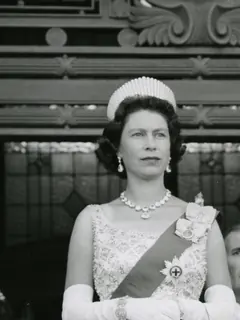
Queen Elizabeth II
At independence on 9 October 1962, Uganda kept the Queen as head of state, with a Governor-General acting for her. The republic began on 9 October 1963.
Sir Edward Mutesa II
The Kabaka of Buganda, and the first President. The post was ceremonial. In 1966 Prime Minister Milton Obote took over his powers, and he went into exile.
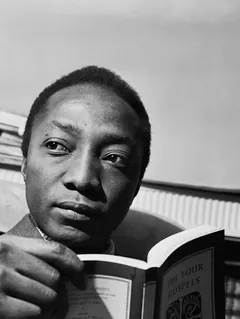
Milton Obote, first term
Prime Minister from 1962. Became executive President under the 1966 constitution. The army overthrew him on 25 January 1971.
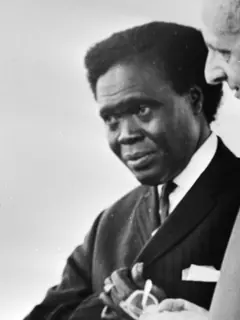
Idi Amin
Took power in a coup on 25 January 1971, ruled first as military head of state, then as President, and as Life President from 1976. He fell when Tanzanian and Ugandan exile forces took Kampala on 11 April 1979.
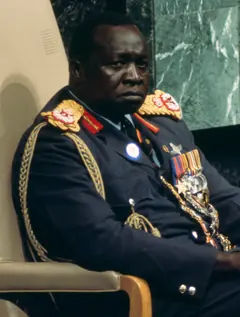
Yusuf Lule
Chosen by the Uganda National Liberation Front. Sworn in on 13 April 1979 and removed by the National Consultative Council on 20 June, after 68 days.
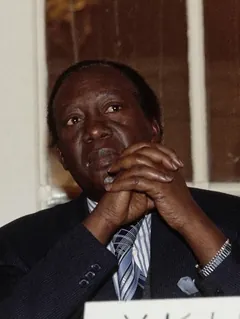
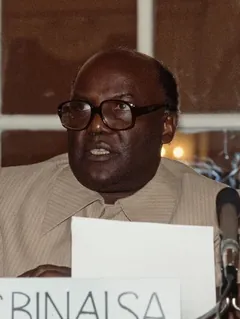
Godfrey Binaisa
Chosen by the National Consultative Council on 20 June 1979. The Military Commission removed him in May 1980.
Military Commission and Presidential Commission
The Military Commission, chaired by Paulo Muwanga, took over in May 1980. On 22 May a three-member Presidential Commission became head of state until the December election: Saulo Musoke, Polycarp Nyamuchoncho and Yoweri Hunter Wacha-Olwol.
Milton Obote, second term
His party, the UPC, was declared the winner of the December 1980 election. Army officers overthrew him on 27 July 1985.
Bazilio Olara-Okello
Led the coup of 27 July 1985 and chaired the Military Council for two days, then handed the chair to Tito Okello.
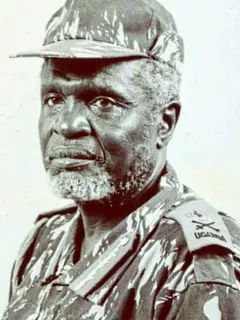
Tito Okello
Chairman of the Military Council. His government fell when the National Resistance Army took Kampala on 26 January 1986.
Since 29 January 1986, the President has been Yoweri Kaguta Museveni.
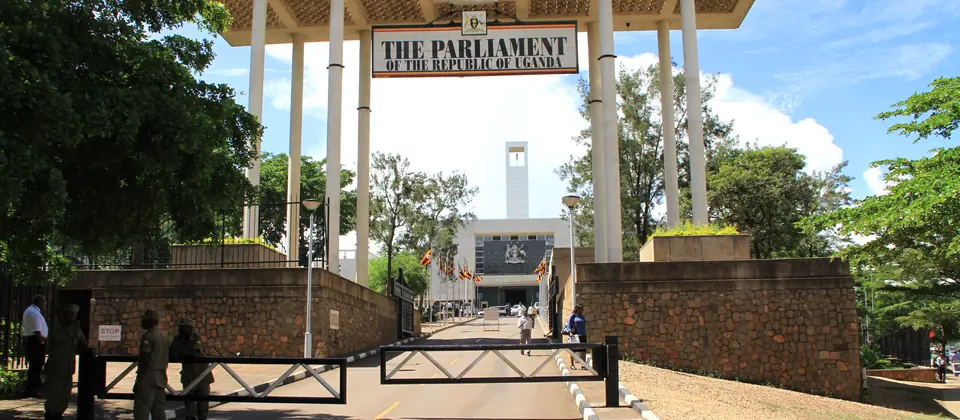
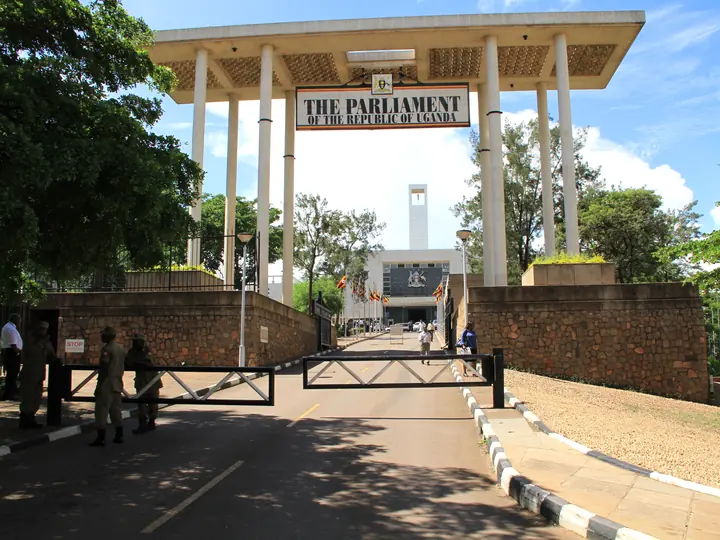
Makes the laws
No one else can make rules with the force of law unless an Act of Parliament lets them. No tax can be charged without an Act.
Approves the money
Parliament passes the yearly budget and must approve government loans.
Watches the government
Committees examine bills and public spending. They can summon a minister or any officer to give evidence.
Vets appointments
Ministers, judges, the Auditor General and the Inspector General of Police need Parliament's approval before they take office.
Speaks for citizens
Each Member carries the views of their voters to Parliament and to ministers.
Speaker
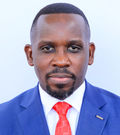
Rt Hon. Jacob Marksons Oboth
Elected on 25 May 2026 with 441 votes. Chairs the House.
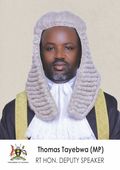
Deputy Speaker
Rt Hon. Thomas Tayebwa
Elected on 25 May 2026 with 457 votes. Chairs when the Speaker is away.
Leader of the Opposition
Hon. Joel B. Ssenyonyi
Named by his party, NUP, and announced by the Speaker on 28 May 2026. Leads the Members who are not in government.
Prime Minister
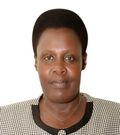
Rt Hon. Robinah Nabbanja
Also Leader of Government Business. Approved by Parliament on 28 May 2026.
Vice President
H.E. Maj. (Rtd) Jessica Rose Epel Alupo
Approved by Parliament on 28 May 2026.
Read on Parliament's own pages and its Official Report on 11 November 2026.
Constituency Members
One for each constituency, elected by its voters.
Woman Members
One for each of the 136 districts and 10 cities.
Army
Chosen by the army council. At least two are women.
Youth
Workers
Persons with disabilities
Older persons
Vice President and ministers who are not elected
They speak in debate but do not vote on questions put to a vote. The number changes with cabinet appointments.
As the Commission's register lists them, checked 11 November 2026. Seats are those in the 12th Parliament on Parliament's roll of 29 September 2026.
Activist Party (AP)
Alliance for National Transformation (ANT)
Seats: 1 · Registered 2019
Congress Service Volunteers Organisation (COSEVO)
Registered 2015
Conservative Party (CP)
Registered 2005
Democratic Front (DF)
Registered 2010
Democratic Party (DP)
Seats: 6 · Registered 2005
Ecological Party of Uganda (EPU)
Registered 2004
Forum for Democratic Change (FDC)
Seats: 9 · Registered 2004
Forum for Integrity in Leadership (FIL)
Registered 2004
Justice Forum (JEEMA)
Registered 2015
Liberal Democratic Transparency (LDT)
Registered 2005
National Convention for Democracy (NCD)
Registered 2004
National Economic Empowerment Dialogue (NEED)
Registered 2005
National Peasants' Party (NPP)
Registered 2004
National Resistance Movement (NRM)
Seats: 373 · Registered 2003
National Unity Platform (NUP)
Seats: 48 · Registered 2019
People's Front for Freedom (PFF)
Seats: 2 · Registered 2025
People's Development Party (PDP)
Registered 2009
People's Progressive Party (PPP)
Registered 2004
Republican Women and Youth Party (RWYP)
Registered 2004
Revolutionary People's Party (RPP)
Social Democratic Party (SDP)
Registered 2005
Society for Peace and Development (SPD)
Registered 2006
The Common Man's Party (CMP)
Registered 2004
Uganda Federal Alliance (UFA)
Registered 2010
Uganda Patriotic Movement (UPM)
Registered 2005
Uganda People's Congress (UPC)
Seats: 12 · Registered 2005
31 committees do most of the detailed work: 16 sectoral and 15 standing.
Sectoral committees (one session)
Standing committees (two and a half years)
A bill is proposed
A minister or any Member can bring one. It is published in the Gazette first.
First reading
The bill is introduced. There is no debate. It goes to a committee.
Committee
The committee studies it, asks the public for views and reports within 45 working days, unless the House gives it more time.
Second reading
The House debates what the bill is for. Normally this is not earlier than 14 days after it is gazetted.
Clause by clause
The whole House goes through each clause and votes on changes.
Third reading
Members vote. Most bills pass with a majority of those present and voting. A change to the Constitution needs two-thirds of all Members, and some changes also need a referendum.
The President
The President has 30 days to sign it, send it back or refuse. If 30 days pass with no step, it counts as signed.
If the President will not sign
If the President sends a bill back or refuses it again after Parliament has passed it a second time, Parliament can pass it once more. With the support of two-thirds of all Members, it becomes law without the President's signature.
Parliament must pass the budget for the year that starts on 1 July.
The President gives the State of the Nation address. It was on 4 June in 2026.
The Finance Minister reads the budget speech. It was on 11 June in 2026.
Send a petition
Visit Parliament
Watch a sitting
Follow a bill
Find your Member
Contact Parliament
Monday to Friday, 8 am to 12:45 pm and 2 pm to 5 pm.
Checked 10 November 2026.
Photo credits: Andrew Regan, CC BY-SA 3.0; Bridge engineer, CC BY-SA 4.0; Fredrick Onyango, CC BY 2.0; DFID, UK Department for International Development, CC BY-SA 2.0; Mark Mackenzie, UK Foreign Office, CC BY 2.0; DFID, UK Department for International Development, CC BY 2.0; State House Uganda, from its website; State House Uganda, from its website; State House Uganda, from its website. Pictures credited to State House Uganda are shown from its website for public information, with credit. We take one down if asked.